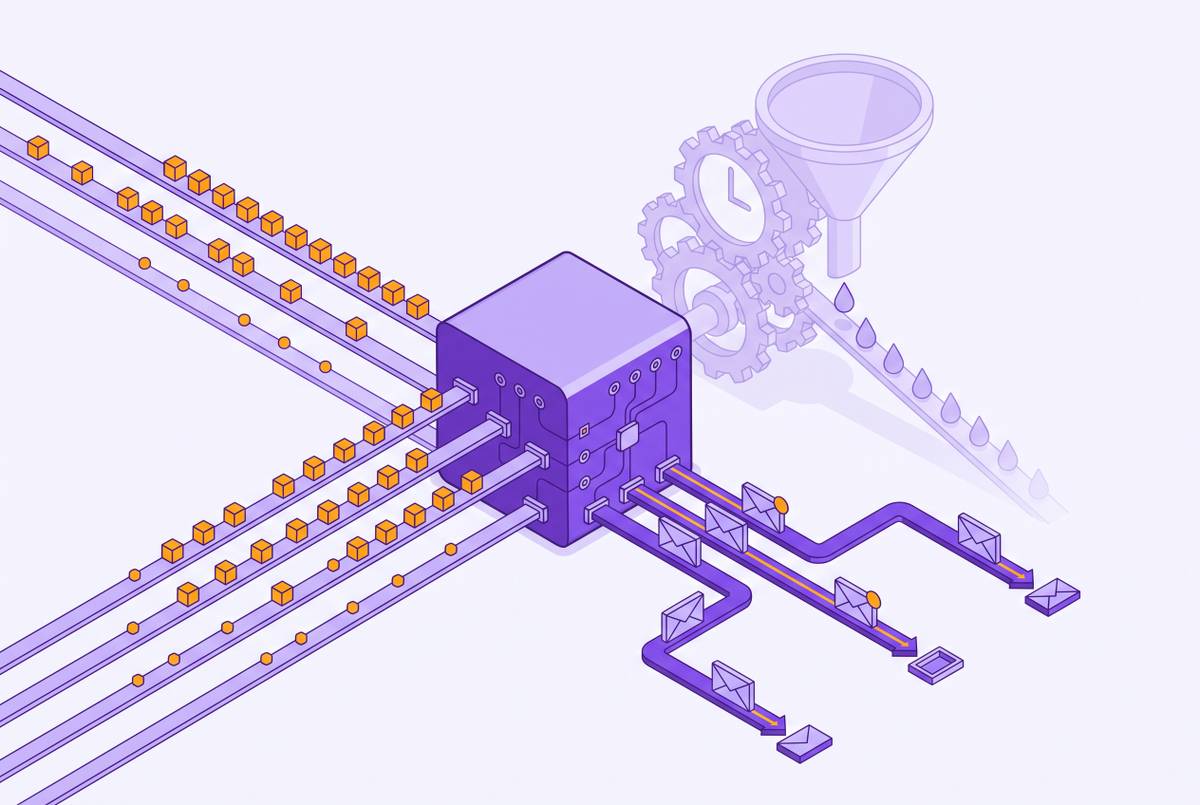
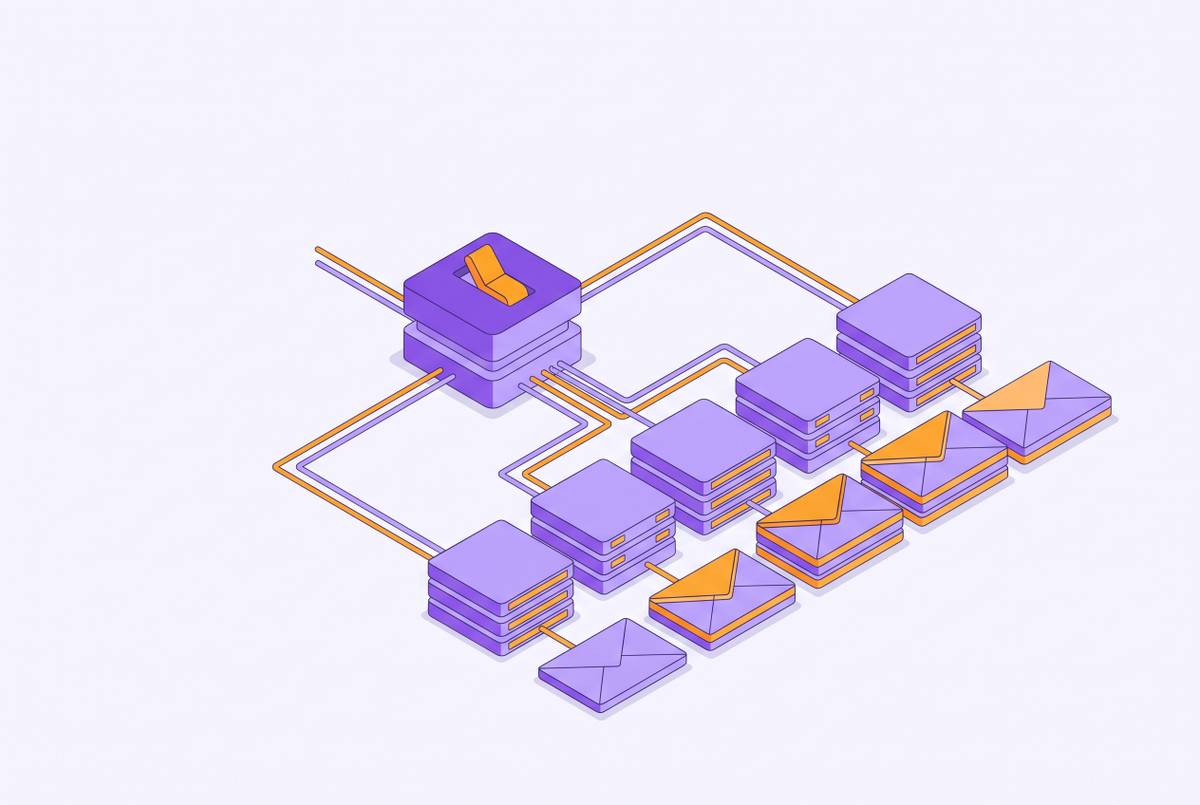
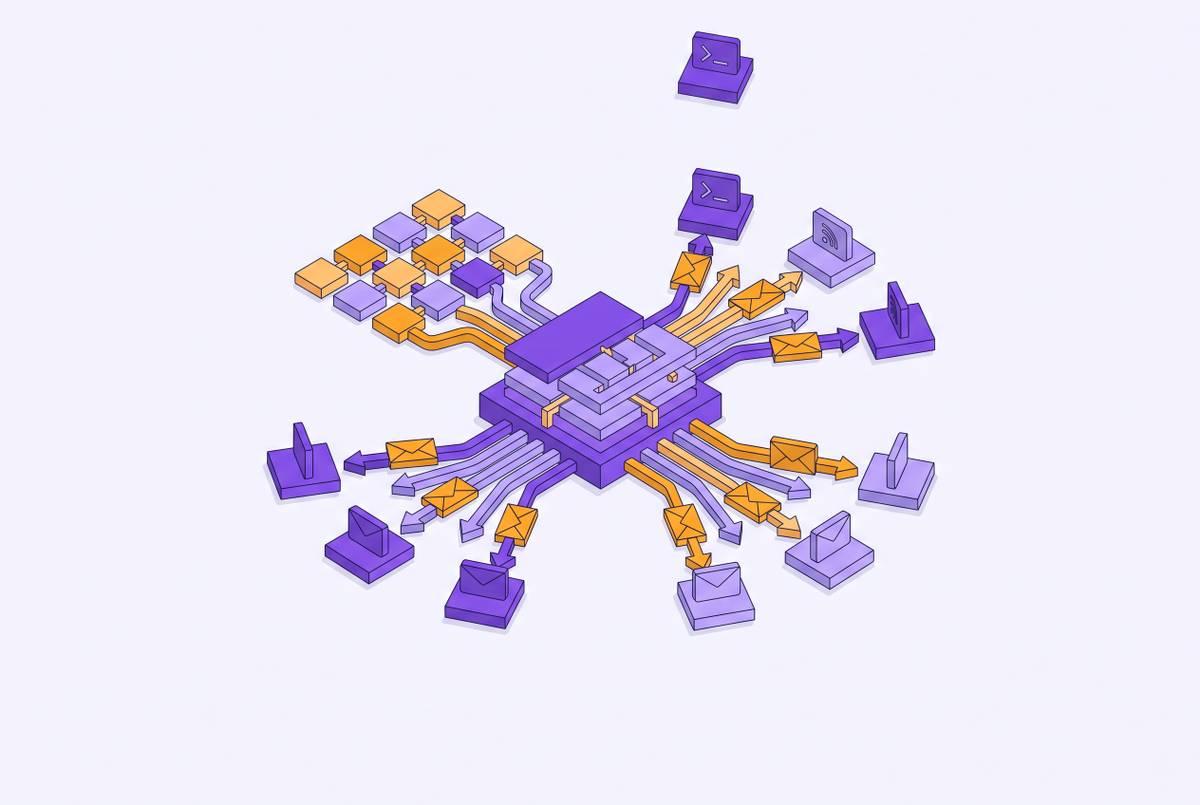
Why Behavioral Depth Separates Feature Adoption Interventions From Feature Announcements
Targeting adoption efforts to users' actual readiness beats broadcasting to everyone at once.
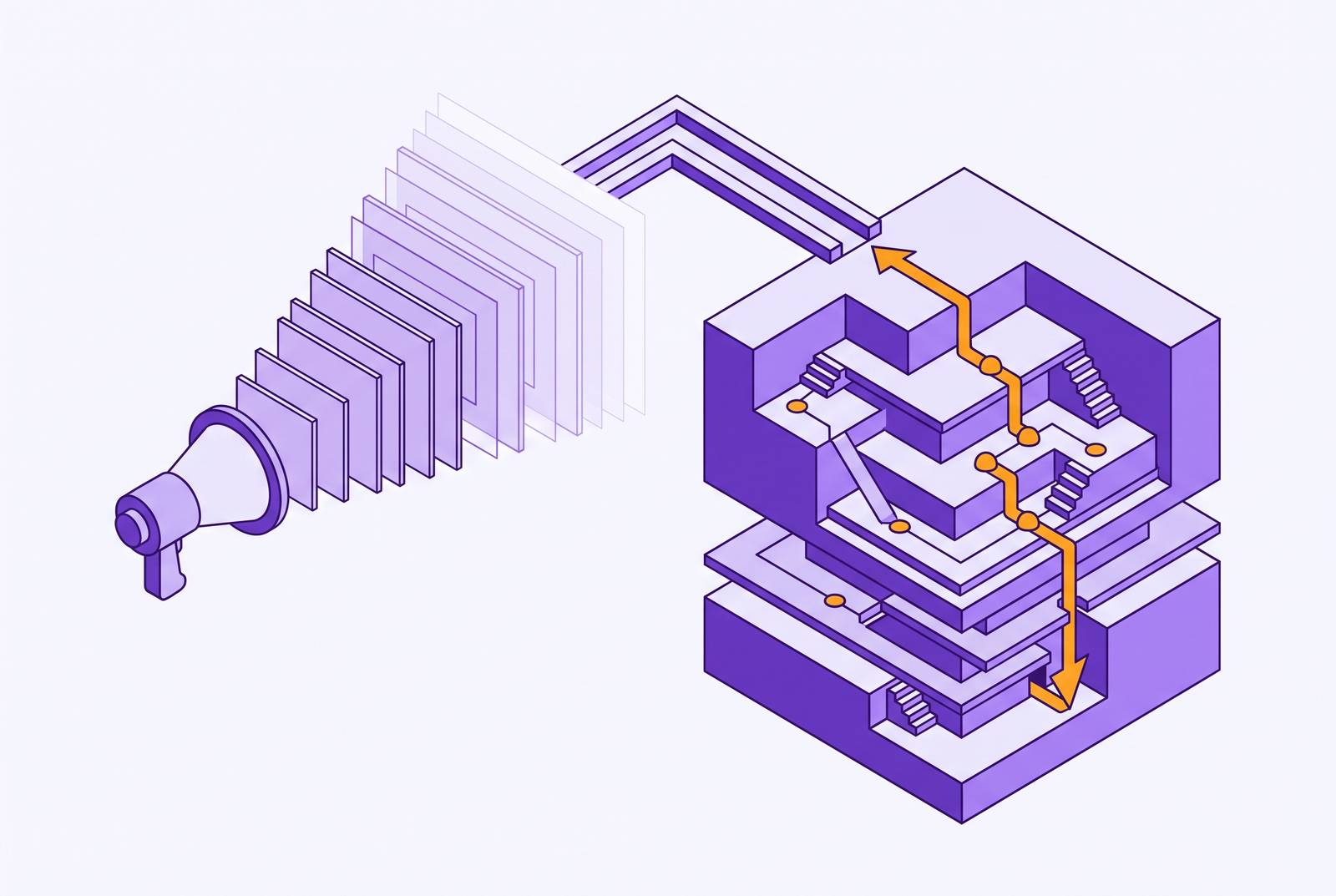
Most feature adoption software fails in the same quiet way. It broadcasts a feature to everyone and treats the broadcast as done. Behavioral depth, the compound of what a user has done over time and what their current state permits, is what separates a real adoption intervention from that announcement. This article breaks down that distinction, why it matters for B2B SaaS specifically, and how to audit whether your own adoption motions measure up.
Why feature announcements fail users who are not ready for them
The structural failure of a feature announcement is not the message. It is the assumption that every active user sits in the same state of readiness at the same moment, and that broadcasting to all of them at once is a sensible way to drive adoption. A secondary feature gets shipped, documented, and announced, and the active user who has not touched it is not ignoring it. They have simply not been given a reason grounded in their own workflow to care about it yet.
Jimo's B2B adoption guide names this the Feature Discovery failure mode in exact terms. Product teams ship new capabilities into a vacuum, power users find them by accident or through documentation, and most users do not find them at all. What was missing is any mechanism that connects the new capability to the specific state of the person receiving the message.
Expanding product surfaces compound the problem with every release. A user who fully adopted the product in January has not adopted the capabilities shipped since then. Their adoption curve resets at each release, and no one designs for that reset. The user who was once fully onboarded becomes progressively less so, not because they abandoned anything, but because the product grew underneath them and the growth was never mapped back to their workflow.
A single broadcast reaches three different people at the same time, and the message is only right for one of them. The user who signed up yesterday lacks the foundation to use the new feature at all. The user already working with the feature daily does not need the announcement. Nothing in a broadcast distinguishes these three people from one another, so the message wastes two of three impressions and the team concludes that adoption is harder than it is.
What feature adoption actually measures, and why the denominator matters
Feature adoption is not awareness and it is not trial. It is the percentage of eligible users who use a specific feature repeatedly in a way that becomes part of their regular workflow. Awareness means the user knows the feature exists. Trial means the user clicked it once. Adoption means the feature shows up in their recurring work. Each of these states is measurable and each is different, yet most adoption dashboards report a blended figure that hides which state users are actually in.
The denominator problem makes the measurement unreliable before any intervention logic has a chance to work. Jimo's B2B adoption guide defines the eligible denominator as the users whose plan tier, role, or feature access allow them to use the capability at all. A feature adopted by most of its eligible users still posts a small adoption number if the denominator includes every account, every tier, and every role regardless of access.
Role segmentation inside a B2B account makes this harder still. The features that drive retention for an account administrator are different from the ones that drive retention for an end user in the same account. A single denominator built without role segmentation obscures both populations. The administrator's healthy adoption of reporting tools masks the end user's total absence from the workflows that keep the account alive, or vice versa. Teams that do not separate these populations cannot tell which segment is actually at risk.
Time-to-second-use is the critical signal that most teams do not track. The gap between a user's first and second interaction with a feature predicts the outcome of the whole adoption effort. Measuring adoption as anything less than repeated use in a workflow turns a curiosity spike into a false positive.
Behavioral depth: what it means to know a user's state before deciding to act
Behavioral depth is not event volume. The term means the combination of current database state and behavior over time, enough joined signal for a system to determine whether a specific person is a meaningful candidate for the next capability. The two layers must connect, and most adoption systems read only one of them.
The state-versus-behavior gap is where the signal actually lives. Treating them identically is exactly what an announcement does. The feature message that is useful to the first person is noise to the second.
Userlens builds on exactly this logic, connecting a backend database of current account state, roles, plans, and configuration with product analytics showing behavior over time. The combination lets the system read the gap between what should be happening and what is happening for a given person, then write the message that person actually needs rather than a merged template. The announcement treats everyone in the cohort as equivalent. The compound signal treats each person as the sum of what they are allowed to do and what they have actually done.
Role-based segmentation is not a shortcut to behavioral depth. Crossbeam demonstrated the point with measurable results. The company implemented behavioral routing for in-product banners, timing announcements to users whose behavior signaled readiness for the next capability, and achieved a 3x click-through rate improvement over their previous role-based announcement strategy.
Why behavioral triggers produce different outcomes than time-based ones
The structural difference between an announcement and an intervention is not the channel and not the copy. It is whether the trigger is grounded in what a specific user has done or in a schedule that was set before anyone knew what that user would do. A calendar-based sequence is authored at the moment of maximum ignorance about the individual. The schedule is fixed. The users are not.
A behavioral trigger fires when the evidence is present, and the evidence is different for every person. The intervention arrives at the moment the user's own behavior has created readiness for it. That is the entire mechanism, and it is also the entire advantage.
The first week of product use is where this distinction carries the most weight. Getting a meaningful share of a cohort back on day seven puts a product in the top quartile of long-term outcomes. Anything that waits for a schedule to fire is guessing during the one window where evidence exists and matters most.
The relevance effect shows up in revenue data, not just engagement data. Klaviyo's data across a large customer base shows that automated behavioral flows drive dramatically higher order rates than broadcast campaigns at similar open rates. Behavioral routing changes the reach-to-impact ratio, not by shouting louder, but by arriving when the user is actually able to hear.
The skip condition matters as much as the send condition. The intervention system that cannot skip is not a targeted system. It is a smaller announcement list.
The B2B account structure problem: why individual session data hides adoption fragility
B2B accounts have a structural property that consumer products do not, and it makes announcement logic actively misleading. Session counts mask a fragility that only becomes visible in churn data weeks later. A product manager reviewing session data sees active users. A customer success manager reviewing the renewal sees a product embedded in one person's workflow and nowhere else in the organization.
Intermittent engagement is the form this fragility takes at the individual level. That fragility does not appear in aggregate session data. It appears in churn data six weeks later, after the decision has already been made and the account is walking out the door. Nothing in a dashboard that sums sessions across all users can distinguish the champion who uses the feature daily from the team member who used it once during onboarding and never returned.
Measuring at the account level instead of the user level surfaces what aggregate session data obscures. An account with one heavy user and nine silent teammates looks the same in aggregate session counts as an account with ten moderate users. The difference determines whether the renewal happens, and the tools most teams use cannot see it.
This is the B2B-specific failure mode, and it changes what an intervention has to do. An effective adoption intervention must distinguish persons within accounts. A broadcast cannot serve both. A system that reads individual state within the account, and routes a different message to each person based on what each has actually done, is the only structure that can. That is what adoption-focused account intelligence systems are built to do, and it is why Userlens investigates each user independently against both configuration and recent activity before deciding whether to send anything at all. The skip logic is enforced at send time rather than left to chance.
What descriptive tools give you versus what an intervention requires
Descriptive analytics surfaces the state of adoption. An intervention requires a system that can determine, for a specific person at a specific moment, whether the evidence justifies acting and what the action should be. The first question informs strategy. The second question is the strategy executing, and it cannot execute from a report.
Jimo's Intelligence-Led Growth framework extends product-led growth past the point where descriptive reporting stops. The product does not just sell itself. It activates itself, at every stage of the lifecycle, for every user in every account. That requires the system to read individual state and act on it, not aggregate it and report it. A dashboard is the aggregation layer. An intervention system is the action layer, and building the former does not deliver the latter no matter how sophisticated the metrics are.
The AI measurement problem adds urgency to the architectural distinction. When AI agents trigger product events, log into workflows, complete tasks, and generate API calls, those events appear in telemetry alongside human activity. The behavioral signal becomes contaminated with machine activity, and a team that cannot tell the difference is building interventions on noise. Teams deploying adoption agents must instrument the human-to-agent usage ratio as a first-class metric to preserve the validity of behavioral signals. That is a level of measurement sophistication that descriptive dashboards were not built to provide. It is a prescriptive requirement, and it arrives on top of all the other prescriptive requirements exactly when descriptive tools are hitting their natural ceiling.
The personalization problem has the same shape. Understanding requires the compound signal. Most systems that claim personalization are doing the second thing, and users can tell.
What a behavioral adoption intervention actually requires to function
A functional adoption intervention requires four things working together. The fourth is a measurement approach that distinguishes successful repeated use from a single-event response. Most teams are missing one or more of these elements, which is why their interventions function as well-targeted announcements at best.
The compound signal is the foundation. Behavioral history, meaning what they have done, how often, and how recently, tells the system whether the prerequisite conditions exist. Both are required and neither alone is sufficient. Connecting the two is the operational definition of readiness, and it is what separates a one-time broadcast from a decision to act on a single person.
Independent per-person judgment follows from the compound signal. Being in the eligible audience does not automatically justify a message. The decision layer must be able to evaluate weak evidence and choose to skip rather than send. The control structure has to be architectural, not advisory, because advisory controls get overridden in the name of reach.
Measurement is where the requirements tighten again. The system must separate the eligible cohort from the full user base, distinguish people from accounts, and separate observed adoption from causal lift. Conflating the two turns every correlation into a success story, and the next quarter's numbers quietly unwrite it.
None of this should require a new tracking plan. If adding a new tracking event requires a developer, the intervention is only as fast as the team that has the least spare capacity. The whole point of behavioral adoption is to act while the evidence is fresh, and a tracking-plan dependency kills that. Userlens works from the database and analytics a team already has for this reason. The intervention layer sits on top of existing infrastructure instead of demanding that the infrastructure be rebuilt first.
Tools and approaches that operationalize behavioral depth for adoption interventions
The meaningful difference between tools in this space is not feature list breadth. It is whether they connect current database state with behavioral history to make a per-person send decision. Tools that lack one of the two inputs are operationalizing announcements, not interventions, no matter how many channels they support or how polished their copy editor is.
Userlens, through its Lumi adoption agent, is built specifically for the adoption intervention problem as defined above. A human approves the goal, audience, guidance, and limits once. Being in the audience does not automatically trigger a send, which is the structural difference between this and a smaller announcement list.
The control and measurement architecture follows the requirements section point by point. The positioning is explicitly for founders, product, growth, and customer teams at B2B SaaS and PLG companies rather than a CS workflow tool, which aligns it with the team most exposed to the announcement-versus-intervention problem. Verify current features, integrations, and pricing at userlens.io.
Jimo occupies a somewhat different position in the same space. The Intelligence-Led Growth framework is designed around stage-specific adoption strategies across Feature Discovery, Depth Adoption, Team-Level Adoption, and Sustained Adoption, each with distinct failure modes and intervention logic. The analytics depth and email-layer personalization using combined state-plus-behavior signals are less explicitly documented as primary capabilities.
In-app digital adoption platforms such as Whatfix take the guided-experience route. The Whatfix Power BI deployment achieved a high monthly active-user rate and strong regular engagement with a key reporting feature, demonstrating that guided in-app flows can drive sustained feature-level adoption when the measurement distinguishes awareness, activation, and sustained usage across user groups. These platforms generally excel at in-product guidance like walkthroughs, checklists, and contextual help, and they are strongest when the intervention is a guided experience inside the product UI. The open question is whether it extends to depth adoption and team-level adoption beyond the first session.
PLG metric and instrumentation platforms form the foundation layer that the intervention layer sits on top of. Tools focused on PQL scoring, funnel tracking, and activation measurement provide defined activation events, eligible-denominator discipline, and cohort-level tracking of time-to-value and free-to-paid conversion. Teams sometimes mistake this foundation layer for the intervention layer, and the gap between them is exactly where adoption stalls.
How to audit whether your current adoption motions are interventions or well-dressed announcements
Most adoption motions that teams describe as behavioral are announcements with a smaller list. The diagnostic question is whether the system can independently evaluate each person and skip when the evidence is weak, or whether membership in the audience is sufficient to trigger the send. Five questions separate the two.
Does the trigger combine current database state, meaning role, plan, and configuration, with behavioral history, or does it use one without the other? Can the system skip an individual in the eligible audience because their behavioral evidence is ambiguous or weak, and does it do so systematically rather than because someone manually removed them? Is the eligible denominator defined in writing, by role, plan, and account configuration, so that adoption measurement is not diluted by users who cannot realistically use the feature? Does the measurement track repeated successful use within the eligible cohort, or does it track opens, clicks, and single-event feature touches?
Getting the denominator right, by segmenting on role, plan, and actual behavior, is the prerequisite for measuring whether any intervention worked. Without a written definition of what adopted means for a specific feature, the five diagnostic questions cannot be answered, and no tooling choice will resolve the ambiguity. The definition comes before the tool, not after it.
The compounding effect of getting the first intervention right shows up in Kommunicate.io's activation rate improvement from a signup-to-integration rate in the low-to-mid forties to the mid-to-high fifties over seven months. A clearer first action changes the behavioral baseline from which all subsequent interventions read, because every later decision depends on what the user did early. Get the first step wrong and the system misreads everything after it.
The scale argument closes the case. The attention a founder gives their first ten customers is the model. The tools that can read the compound signal, decide per person, and skip when the evidence is weak are the ones that answer that question affirmatively. The tools that cannot are announcements, and announcements never scaled past the first ten customers either.